News, page 4, issue 465, April 25, 2010
Translated by Tang Xiangyang
Original article: [Chinese]
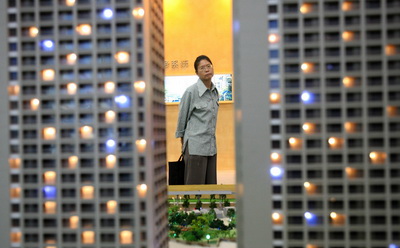
Many Chinese property owners have been looking on with a sense of dread as economists and policy-makers have discussed the likelihood of the central government introducing a property tax (物业税 or wùyèshuì) to curb the rapid rise in housing prices in some of the country's first-tier cities over recent weeks.
According to information obtained by The Economic Observer, an annual tax on the property assets of Chinese property owners will be piloted in four of China's largest cities this year, but the tax will be different from the property tax that many first anticipated.
Instead, it's been revealed that the central government plans to trial a real estate tax (房产税), in the cities of Beijing, Shanghai, Chongqing and Shenzhen within the year.
After the tax has been piloted in these four cities, it will be applied on a national scale.
The real estate tax was previously only imposed on properties being operated on a commercial basis and not on owner-occupied residences. Now it seems likely that residential properties that meet certain, as yet unspecified, conditions will also be subject to the tax.
Property Tax Shift
The EO has learned that the People's Bank of China, China's Banking Regulatory Commission, the State Administration of Taxation, the Ministry of Land and Resources, the Ministry of Finance and the Ministry of Public Security have been in discussions about when and how to impose a property tax.
According to some participants, all the parties agree that local governments are suffering from a lack of revenue and that the central government has no option but to work out a method of providing them with a stable source of fiscal income.
The piloting of a property tax in select cites and provinces in recent years - though the tax was never actually implemented, only trialled on a mock payment basis - was considered by many as a solution and that revenue from such a tax could serve as a major source of revenue for local governments.
But there are various obstacles hindering the implementation of such a property tax, including legal obstacles and disagreements over how to design and calculate the tax. As a new tax item, it needs to be approved by the National People's Congress, a lengthy process, before it can be issued.
Real estate tax, on the contrary, is a tax imposed on the act of owning a property and has existed in the form of a temporary regulation. Revising an existing regulation only requires the approval of the State Council, a much simpler process than getting approval from the NPC.
Another factor that makes the introduction of a real estate tax more appealing than a property tax, is that land taxes are not effected by the introduction of a real estate tax.
On April 22, the EO learned from a reliable source that Beijing, Shanghai, Chongqing and Shenzhen will become pilot cities for the launch of the new real estate tax.
The tax will first be trialed in Chongqing, Shenzhen and Beijing, however, the introduction of the tax in Shanghai is likely to be delayed until after the World Expo has concluded.
According to the Temporary Regulations on Real Estate Tax issued in 1986, the owner of a property worth one million yuan is required to pay a real estate tax of 8,400 yuan per year. If the property is rented out and the rental price is 100,000 yuan per year, then the tax is 12,000 yuan.
If the tax is to be levied on residential properties, the tax rate will be adjusted, with a threshold being introduced so that only some property owners will be required to pay the tax. The tax is likely to be implemented in a progressive fashion, so that rates for larger properties will be charged at a higher rate than those on smaller properties.
The exact nature of the threshold that will determine which properties will be exempt from paying the real estate tax has not yet been settled.
Aside from considering the floor space of a particular property, another possibility is to implement the tax based on the number of properties an individual owns. Some experts believe that owning a third home indicates that an individual is a property investor and therefore should be taxed.
Yet another option is to simply impose the real estate tax on all homes owned by individuals.
The differences between these two methods of taxation is that implementing a tax on people who own three properties or more, resembles a temporary policy aimed at curbing the swift rise in housing prices. When the growth in housing prices stabilizes, the government may eliminate the tax.
The other option of charging all home owners by expanding the extent of the tax so that it also applied to non-commercial properties, would effectively be the same as implementing the long-anticipated property tax.
However, difficulties will also plague any attempts to reform the existing real estate tax regulations.
For example, if the tax is based on the value of housing, then the government needs to first ensure that all cities are capable of reasonably determining property values and that their is also a reliable system in place to accurately determine the number of houses owned by a particular individual.
Since information of this nature is not commonly shared between government departments, further negotiation is needed to tackle these technical issues.
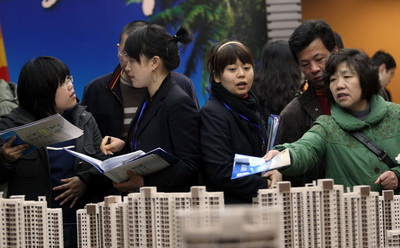
Will the Property Tax Control Housing Prices
Despite much discussion in the media of a property tax (物业税 or wùyèshuì) being the pin needed to burst the growing asset bubble in the country's real estate sector, will the introduction of any kind of property or real estate tax really be able to rein in China's booming housing market?
|
