Luxury brands and businesses, initially worried about China’s drop in consumption, are now focusing on the fate of their Italian supply chains as the country continues to battle Covid-19.
Some manufacturers are operating at reduced capacity, while others have decided to halt operations temporarily. All see the impact on the sector lasting until mid-2021.
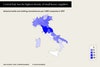
The Italian government approved a 25 billion economic package, but more stimulus, financing and strategic planning will be needed in the rebound phase. “It’s an era-defining moment,” says Stefano Albini, president of luxury textile manufacturer Albini Group. In Italy, which is facing the worst outbreak of theCovid-19virus outside of China, entrepreneurs, luxury business owners and manufacturers are bracing themselves. On 9 March, the country entered a lockdown that includes schools, non-essential travel and all commercial activities, with the exception of those providing food and medicines. For the time being, the government order doesn’t include industrial production and manufacturing. However, companies have had toquickly adhere to new rules, including allowing office employees to work from home, regularly sanitising manufacturing plants and maintaining a safe distance of at least one metre between workers. “We had to change strategy in relation to how we communicate, how we sell, and how we operate,” says Cesare Casadei, creative director of family-run luxury shoe brand Casadei. The label, which is manufactured in-house, is based in San Mauro Pascoli, in Emilia-Romagna, the country’s second most-hit region by the pandemic after Lombardy. The company’s manufacturing operations are running, but Casadei has implemented alternate production cycles to respect the government mandate of distance between workers. Theinitial economic impactof Covid-19 on luxury brands was mainly calculated in terms of the drop in consumption when the outbreak was concentrated in mainland China, affecting the spending and travelling habits of luxury’s most important customers. Now the focus is shifting to the whole luxury supply chain. Italian householdsspend halfof what Chinese households spend on luxury goods per year, but the country remains the heartland of global luxury manufacturing. Roughly 88 per cent ofKering’s centrally managed suppliers are in Italy, as are the majority of Prada’s owned manufacturers. LVMH has 30 production sites in the country andOnly The Brave, which owns Margiela, Viktor & Rolf and Marni, produces more than 90 per cent in Italy. According toConfartigianato Moda, there are a total of 55,491 micro and small enterprises operating in the textile, clothing and leather sectors with a total of 311,697 employees. In 2018, exports from these three sectors reached 52.7 million, around 83.3 per cent of all fashion exports.
As the epicentre of the pandemic has moved from Asia to Europe, management consulting company BCG has revised itsinitial forecast, which anticipated a 10 to 15 per cent drop in luxury sales for 2020. It has now increased the drop to 20 to 25 per cent, or a decrease in sales between 70 and 87 billion from the current value of 349 billion. However, Guia Ricci, principal of BCG Milan, still believes that retail sales will suffer a greater blow than production, as luxury’s traditionally long lead times could shelter its supply chain. The garments in stores now were produced six or more months ago, and what supply chains are producing now will likely be on shop floors at the end of the year, Ricci says. “Maybe the pace has slowed down, but we believe that for the Autumn/Winter 2020 collections there is still time to catch up.” Manufacturers and entrepreneurs think otherwise, anticipating the slowdown’s impact to be felt at until the first half of 2021. “It’s a long wave,” says Arianna Casadei, marketing manager at the family-owned company. “It’s not only about China’srebound, Italy’s rebound; it’s an issue that affects the world.” Delays, cancellations and closuresWith most of its production based in Italy and only 5 per cent of revenue coming from China, OTB was minimally impacted by the outbreak of Covid-19 until it reached the country at the end of February. Soon after, according to CEO Ubaldo Minelli, clients inquired about cancelling orders that were already in production or to defer payments of pre-collection shipments, which usually hit stores in April. The group hasn’t adjusted its 2020 revenue target for now. An impact is inevitable, says Minelli, although too difficult to quantify yet. “The coronavirus has resulted and will inevitably lead to delays in the deliveries of the productions and in turn, we will have delays with our customers,” he says. Manteco, a luxury supplier of wool based in Prato, Tuscany, has already seen a reduction in order quantities and some order postponements. At Sapaf, a family-run leather company based in Scandicci, which produces handmade leather accessories for international luxury brands, SS20 orders haven’t been delayed or cancelled, but CEO Andrea Calistri is expecting lower order quantities for AW20. The cancellation of trade fairs and the uncertainty around the fate of the ones to come, and consequently the opportunity to meet with clients, has also weighed in. |
 |